
Linux Kernel 7.0 was released! Linus Torvalds announced it on Sunday afternoon:
The last week of the release continued the same “lots of small fixes” trend, but it all really does seem pretty benign, so I’ve tagged the final 7.0 and pushed it out.
I suspect it’s a lot of AI tool use that will keep finding corner cases for us for a while, so this may be the “new normal” at least for a while. Only time will tell.

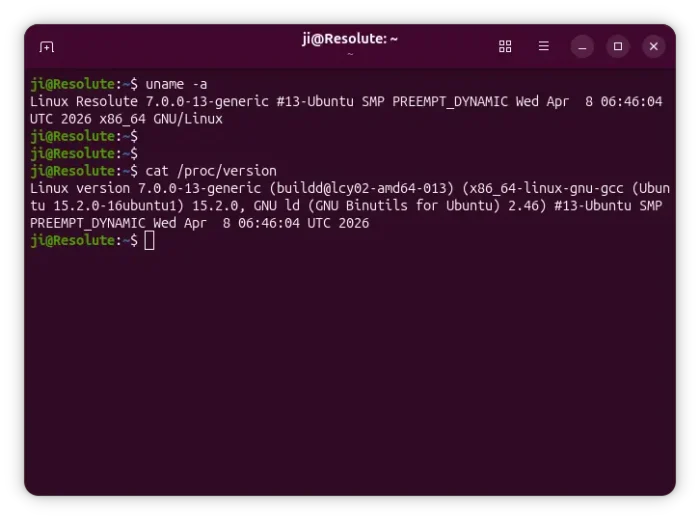
Ubuntu 26.04 default to Kernel 7.0
The new kernel introduced many new features! For Intel, the TSX mode now defaults to “auto” rather than being off for capable hardware, e.g., Xeon series processors, improving the performance of multi-threaded software.
It added DSA 3.0 accelerators for high performance data copy and analytics acceleration with software adapted to make use of the engine on recent Xeon CPUs.
For the upcoming Xeon 7 (Diamond Rapids) processors, the new kernel added perf performance analysis support, and NTB driver support for two or more servers to communicate directly over PCIe.

The Kernel also added Nova Lake sound support, Nova Lake S support for Intel LPSS driver, thermal control for Intel Panther Lake, Wildcat Lake, and Nova Lake processors, as well as L2 cache stats report for recent Intel CPUs via Turbostat command line tool.
It as well added “Slow” workload hints support for Intel Panther Lake, allowing to handle background or long-running tasks more efficiently.
On the GPU side, it added multi-device Shared Virtual Memory (SVM) support for Intel Xe graphics driver, multi-queue execution mode support for Intel Crescent Island GPU, Nova Lake graphics support, as well as more Intel GPU temperature sensors with xe driver.

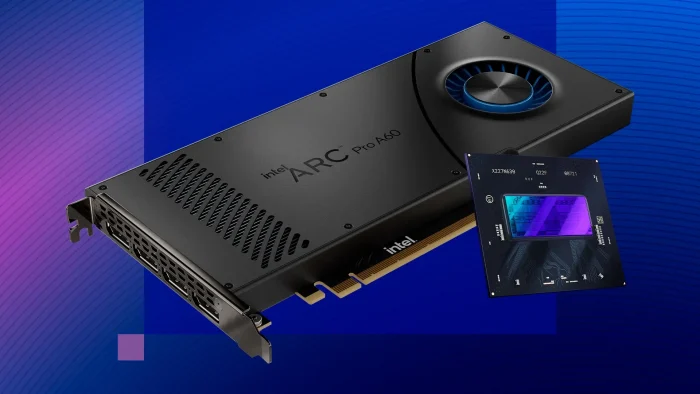
image from Intel.com
For AMD, it added AMD Zen 6 events and metrics support in the perf tool, and Compute Express Link (CXL) support for Zen 5 address translation feature.
It also updated AMDKFD compute driver and AMDGPU graphics driver for GC 12.1, GC 11.5.4, SDMA 7.1, SDMA 6.1.4 support, as well as AMDGPU support for SMUIO 15.x, PSP 15.x, IH 7.1, IH 6.1.1, MMHUB 3.4, MMHUB 4.2.
Thanks to Valve’s open-source Linux graphics team, Linux Kernel 7.0 also improved support for the old AMD GCN 1.0 and GCN 1.1 GPUs, e.g., Radeon HD 7000, HD 8000 series.

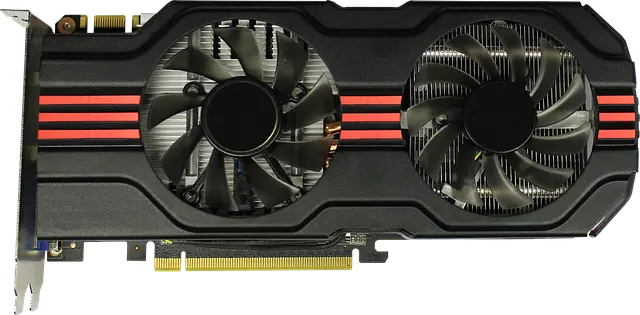
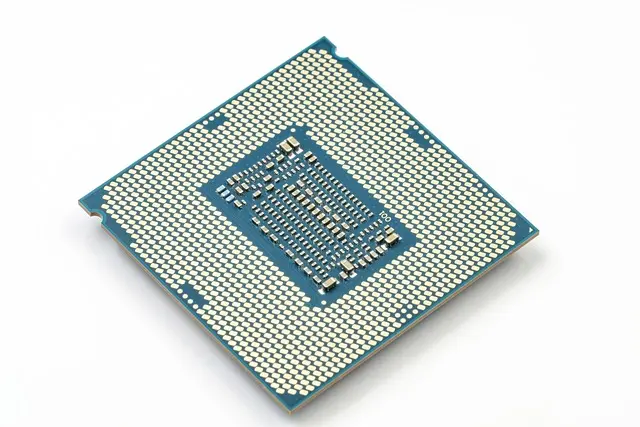
image by rwindr from pixabay.com
Besides the Intel and AMD updates, this kernel also features SMT hot-plug support, 128-bit atomic cmpxchg support and MEMFD_SECRET system call for LoongArch processors, user-space control-flow integrity (CFI) support for RISC-V, and 64-byte single-copy atomic instructions (LS64/LS64V) support for ARM64 processors.
Linux Kernel 7.0 also improved EXT4 filesytem writing performance when dealing with concurrent direct I/O writes to multiple files, and added new attribute to control the error report timer. It introduced large folio support for F2FS to enhance read speeds for immutable files, and implemented tracepoints to diagnose and resolve lock priority inversion. As well, it added octal DTR “8D-8D-8D” support in SPI NAND for better performance.
Other changes include:
- Fix larger pages and compression support for the open-source Nouveau kernel driver.
- Add TI AM62P SoC support via Imagination’s PowerVR driver.
- Add Thunderbolt Alternate Mode support to the UCSI driver.
- New TI RGB LED driver for TI LP5812 4×3 matrix RGB LEDs
- Power sequencing driver for PCIe M.2 connectors.
There are updated drivers for monitoring Pro WS TRX50-SAGE WIFI A and ROG MAXIMUS X HERO motherboards, Micro PC 2, ASRock Z590 Taichi, and Dell OptiPlex 7080.
And new hardware support include:
- SpacemiT Key Stone K3 support.
- Qualcomm Snapdragon 8 Elite Gen 5 “Kaanapali” SoC.
- rtd1501s, rtd1861b and rtd1920 chips.
- Snapdragon 7s Gen 3 SM7635 SoC support.
- Realtek RTL8127ATF 10G Fiber SFP support.
- Qualcomm QCC2072 support.
- Airoha AN8811HB 2.5 Gbps PHY support.
- Rock Band 4 PS4 PS5 guitars.
- Side buttons on the RAPOO 0x2015 mouse.
- Multi-touch eGalaxTouch EXC3188.
- Multi-touch quirks for the Lenovo Yoga Book 9i.
- Fn lock and WMI fan control for various ASUS laptops.
- Apple USB Type-C PHY support.
- PHY support for the Qualcomm Snapdragon X2 Elite hardware.
- Manual fan control on HP Victus S laptop models.
For more about Kernel 7.0, see phoronix.com or Linux Newbies.
Install Linux Kernel 7.0 in Ubuntu
As mentioned Linux Kernel 7.0 will be default in the upcoming Ubuntu 26.04 LTS.
For current Ubuntu 25.10, you may try the Ubuntu Mainline Kernel packages by downloading them from the link below:
NOTE: The Mainline Kernel packages do NOT install on Ubuntu 24.04. And, they are for testing purpose only! They are NOT signed (need to disable secure boot) and lack Ubuntu specific drivers.
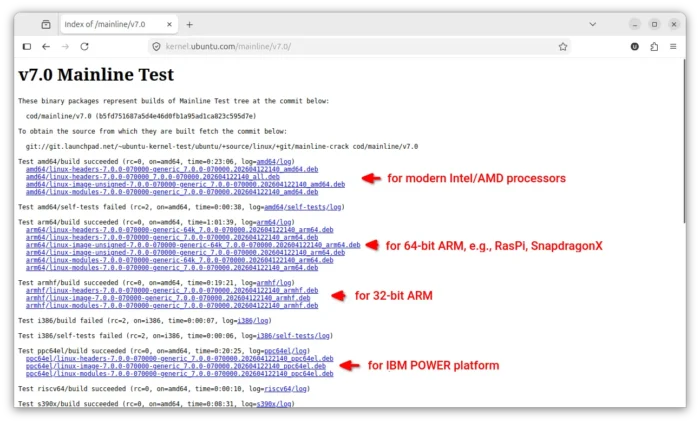

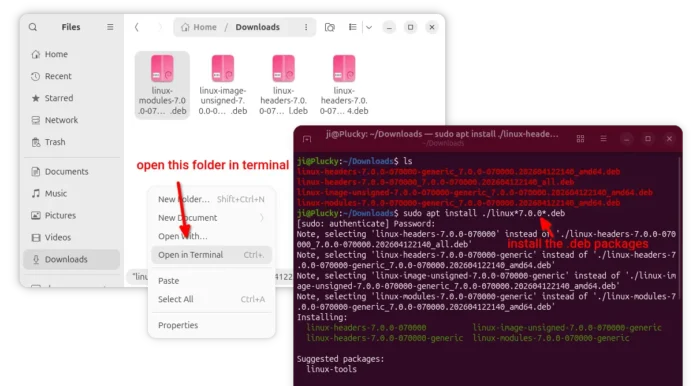
Then, install via apt command and restart computer to apply change.