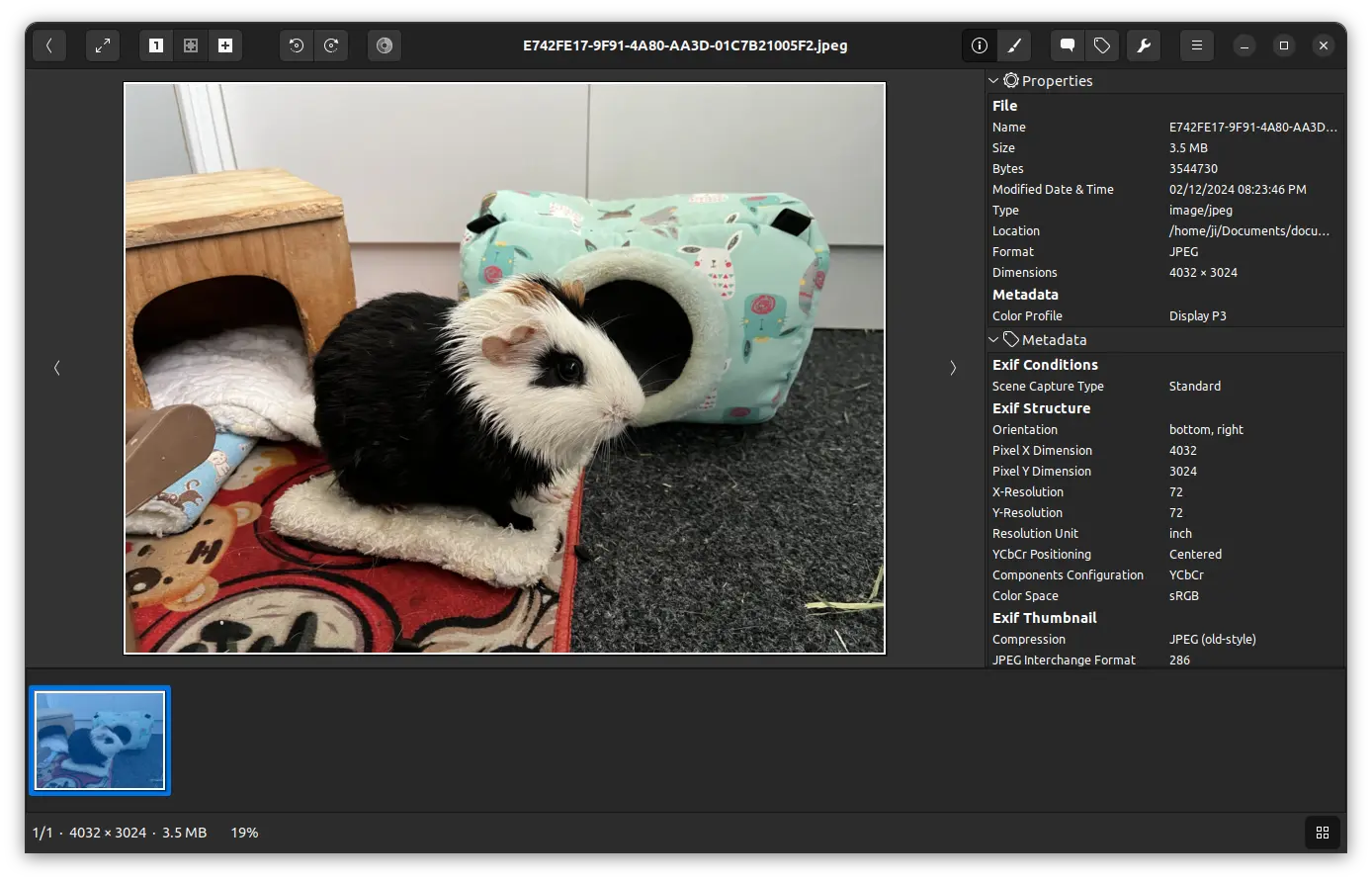

Shotwell, the photo manager and image viewer application for GNOME, released new 0.32.15 version today.
The new version of this free open-source app added minor new features, few bug-fixes, and translation updates.
News, Tutorials, Howtos for Ubuntu Linux
Shotwell, the photo manager and image viewer application for GNOME, released new 0.32.15 version today.
The new version of this free open-source app added minor new features, few bug-fixes, and translation updates.


Loupe is the core image viewer app for GNOME since version 45, but it’s so far not made default in Ubuntu.
It’s a fully adaptive image viewer that supports mobile form factors. It’s touch-friendly that supports 2-finger swipe left/right to navigate, 2-finger pinch/stretch to zoom out/in, and 2-finger gestures to rotate images.
Other features of Loupe include fast GPU accelerated image rendering, tiled rendering for vector graphics, sandboxed image decoding, and more.
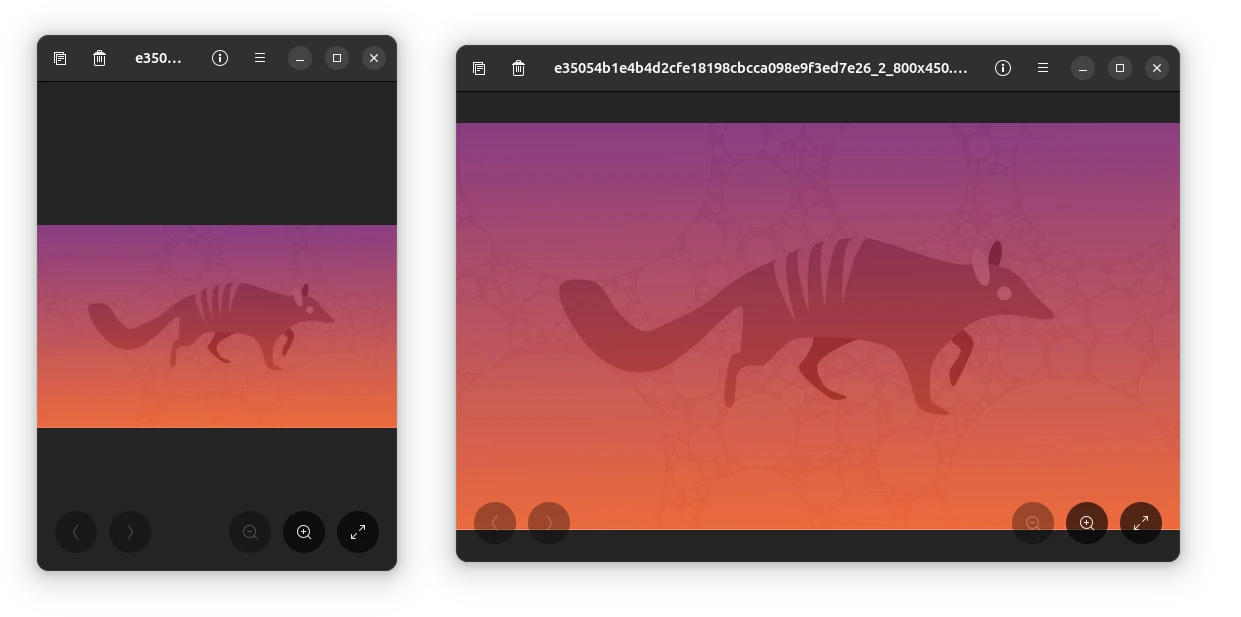

gThumb image viewer and organizer released new 3.12.5 release this Sunday. It is a small release only contains translation updates and a few bug-fixes.
Bug fixes in the release include:
Nothing else!
This simple tutorial shows how to install the latest gThumb (3.12.8 so far) in Ubuntu 25.04, Ubuntu 24.04, Ubuntu 22.04, and 20.04
gThumb image viewer and organizer has rolled out version 3.12.3 and 3.12.4 recently, while Ubuntu still has v3.12.2 in system repositories.
The new releases introduced some new features as well as various bug-fixes. According to the NEWS file, gThumb now supports transparency for Tiff and TGA files, has a new internal video thumbnailer (/usr/libexec/gthumb/video-thumbnailer), though as a beginner I didn’t figure out how to use it.
For better user experience, the image viewer now has zoom gesture support; Zoom slider can zoom in/out in range of 5% and 1000%; Crop tool has new 1.91:1 predefined ratio; And, there are other changes include:
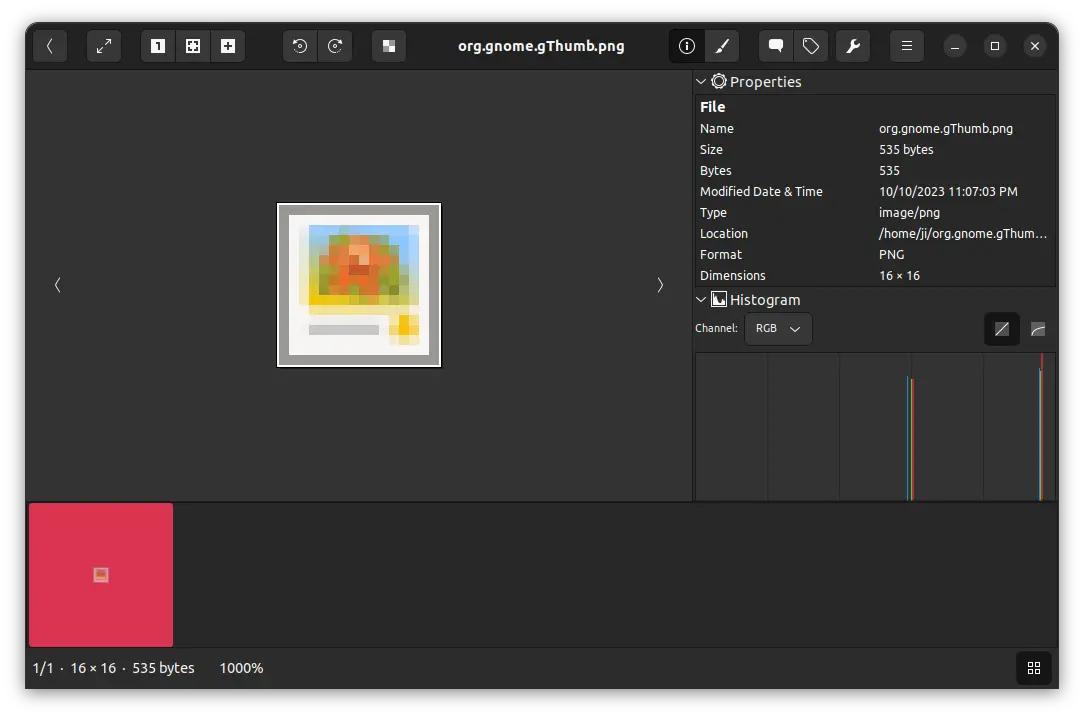
Zoom 1000%
The PPA so far provides packages for Ubuntu 20.04, Ubuntu 22.04, Ubuntu 24.04, and Ubuntu 25.04.
Firstly open terminal either from start menu or by pressing Ctrl+Alt+T on keyboard. When it opens, paste the command below into terminal and hit run:
sudo add-apt-repository ppa:ubuntuhandbook1/apps
Type user password (no asterisk feedback) when it asks for sudo authentication, then hit Enter to continue.
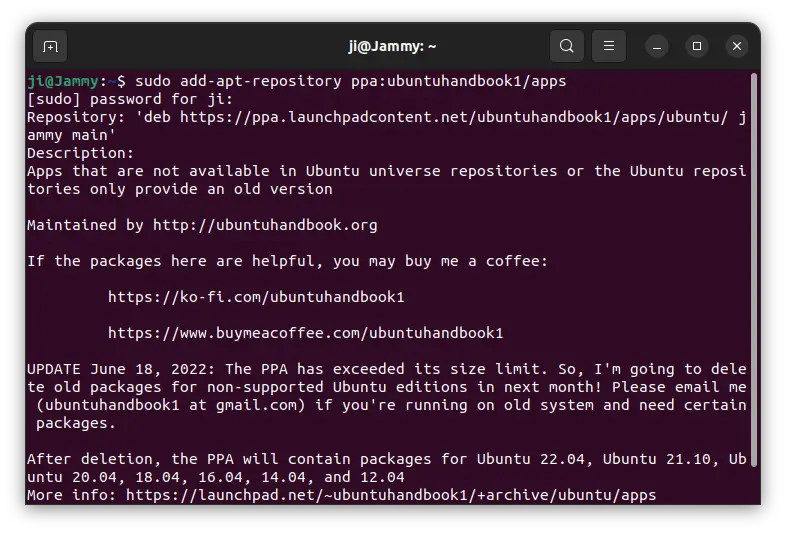
Adding PPA will automatically refresh the package cache in Ubuntu 20.04 and higher. However old versions and some Ubuntu based systems does not. To do it manually, simply run command in terminal:
sudo apt update
Finally, either run the apt install command in a terminal window to install the image viewer:
sudo apt install gthumb
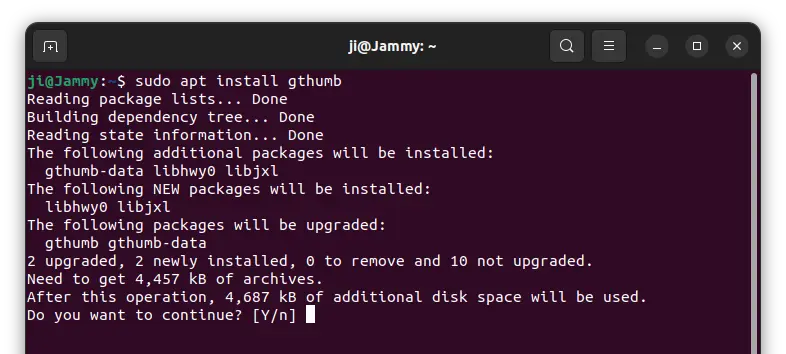
Or use the Software Updater (Update Manager) utility to receive package updates. Un-check other packages from the PPA if you don’t want them.
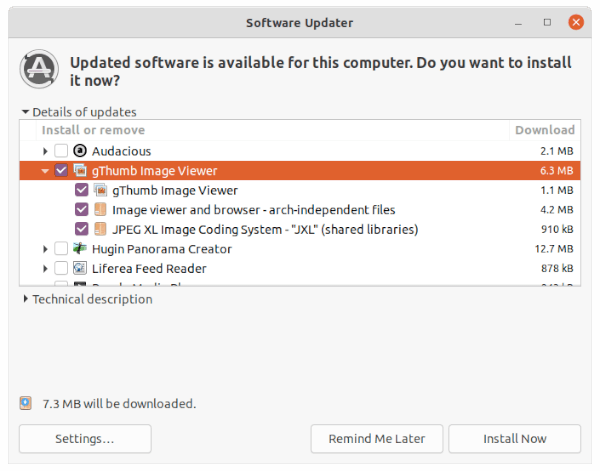
You can restore to the stock version of the image viewer and organizer by purging the PPA repository. To do so, simply run command:
sudo apt install ppa-purge && sudo ppa-purge ppa:ubuntuhandbook1/apps
To remove the gThumb package, simply run command:
sudo apt remove --autoremove gthumb gthumb-data
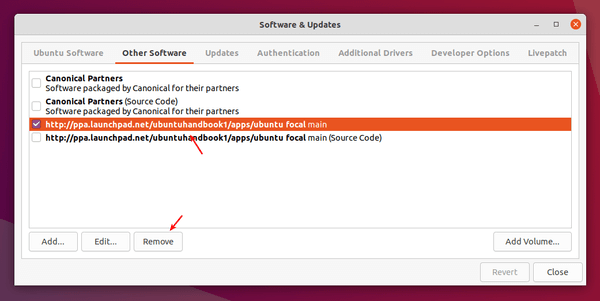
You may also keep the gThumb package but remove the Ubuntu PPA, since it contains many other software packages that you don’t prefer. To do so, either run command in terminal:
sudo add-apt-repository --remove ppa:ubuntuhandbook1/apps
Or remove the repository line under ‘Other Software’ tab via Software & Updates utility.

gThumb image viewer and organizer announced version 3.12.0 as the new stable release series!
gThumb 3.12.0 is the new stable series since the last 3.10.x, while the 3.11.x is the development release.
The new release includes many new features compare to the previous stable 3.10.x. They are all introduced in the 3.11 development releases, so you may already enjoy using them for a period of time.
With libheif library, gThumb now opens AVIF, HEIF (include Apple’s HEIC) images, and allows to save images as AVIF. And it supports JPEG XL images using the jpeg-xl library. A template editor is available to edit text values with special codes, for use in script commands, rename templates, print header and footer, etc.
Besides that, it improved file navigation for directory contains thousands of images. The file list now starts more thumbnailers in parallel, status bar has button to show the progress dialog. And the color picker tool shows colors in two more formats: rgb in % and hsl. Others include:
For those already running gThumb 3.11.4, there are only bug-fixes and translation updates.
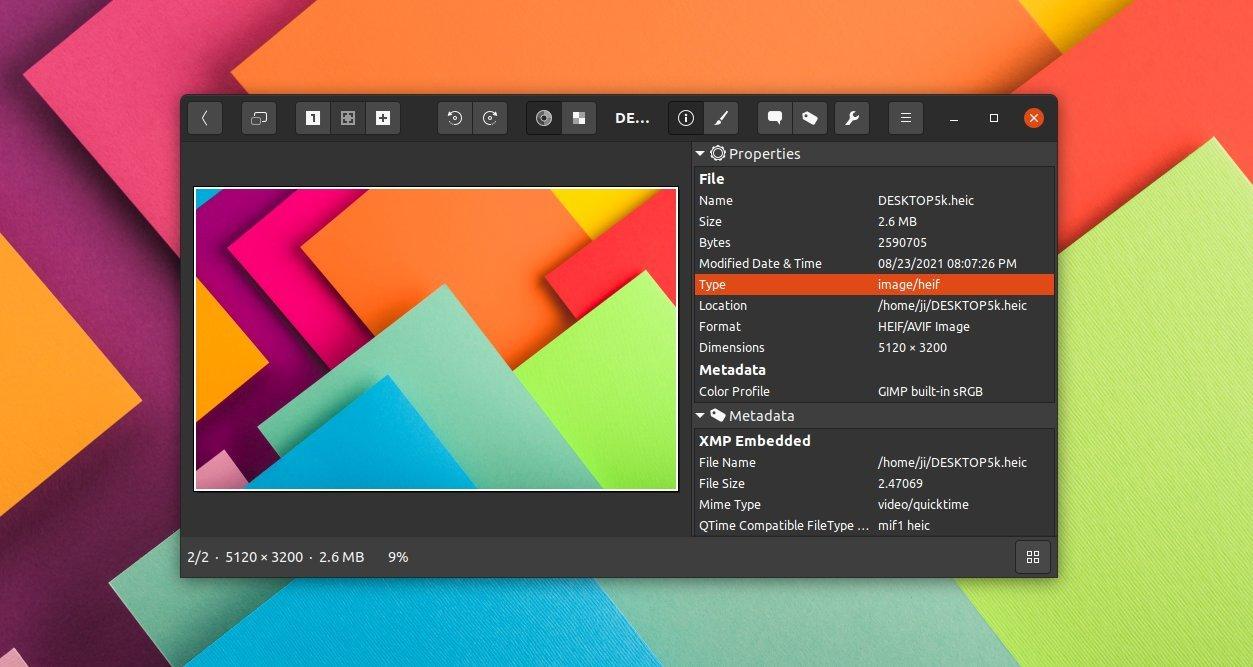
The software does not provide official binary package. Besides building from the source tarball, you may install it via the unofficial Ubuntu PPA.
The PPA so far provides packages for Ubuntu 20.04, Ubuntu 21.04, Ubuntu 21.10, and Linux Mint 20. It contains package for Ubuntu 18.04 but lacks JPEG XL support.
Firstly open terminal either from start menu or by pressing Ctrl+Alt+T on keyboard. When it opens, paste the command below into terminal and hit run:
sudo add-apt-repository ppa:ubuntuhandbook1/apps
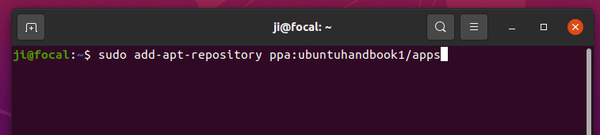
Adding PPA will automatically refresh the package cache in Ubuntu 20.04 and higher. However old versions and some Ubuntu based systems does not. To do it manually, simply run command in terminal:
sudo apt update
Finally, either run the apt install command in a terminal window to install the image viewer:
sudo apt install gthumb
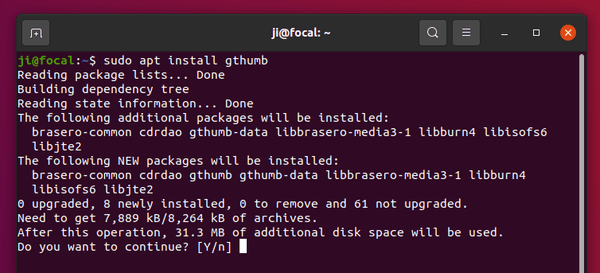
Or use the Software Updater (Update Manager) utility to receive package updates. Un-check other packages from the PPA if you don’t want them.
You can restore to the stock version of the image viewer and organizer by purging the PPA repository. To do so, simply run command:
sudo apt install ppa-purge && sudo ppa-purge ppa:ubuntuhandbook1/apps
You may also keep the gThumb package but remove the Ubuntu PPA, since it contains many other software packages that you don’t prefer. To do so, either run command in terminal:
sudo add-apt-repository --remove ppa:ubuntuhandbook1/apps
Or remove the repository line under ‘Other Software’ tab via Software & Updates utility.
The GNOME image viewer and organizer app, gThumb 3.11.4 was released! PPA updated with Ubuntu 18.04, Ubuntu 20.04, Ubuntu 21.04, and upcoming Ubuntu 21.10 support.
Thanks to libheif library, the new release introduced HEIF file format support, so it can now handle photos imported from your iOS devices. Also AVIF, an image file format specification for storing images or image sequences compressed with AV1 in the HEIF file format is supported, and you can save file as AVIF.
There’s a performance improvement for browsing directory with thousands of images, so users will get a smoother experience. The file list now starts more thumbnailers in parallel, status bar has a button to show the progress dialog. And the color picker tool shows colors in two more formats: rgb in % and hsl.
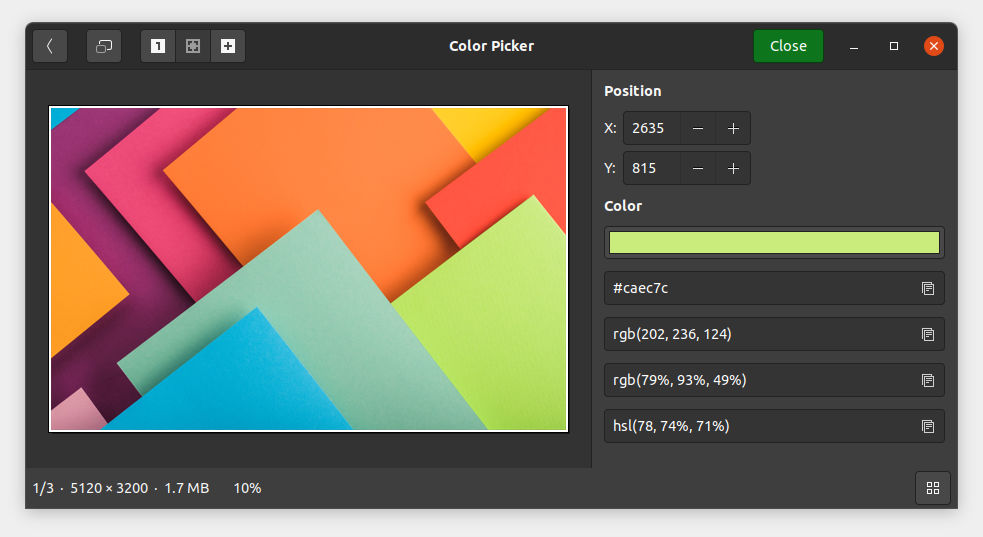
Other changes include:
The software lacks a repository for Ubuntu packages. Besides building from the source tarball, I’ve made the packages into the unofficial PPA for Ubuntu 18.04, Ubuntu 20.04, Ubuntu 21.04, Ubuntu 21.10, Linux Mint 20 and derivatives.
To add the PPA, open terminal either from the ‘show applications’ menu or by pressing Ctrl+Alt+T on keyboard. When terminal opens, run command:
sudo add-apt-repository ppa:ubuntuhandbook1/apps
You can then either upgrade the image viewer from an old version via Update Manager (Software Updater), or run command in terminal:
sudo apt install gthumb
NOTE for Linux Mint, you have to run sudo apt update to refresh package cache first.
To remove gThumb image viewer, run command:
sudo apt remove --autoremove gthumb gthumb-data
To remove the Ubuntu PPA, either run the apt-add-repository command with --remove flag, or use Software & Updates -> Other Software.

PhotoQt, a free open-source Qt5 image viewer supports for touch-screen, slideshow, and uploading to imgur.com, reached the 1.6 release earlier today.
PhotoQt 1.6 features:

The developer offers a PPA repository with the latest packages for Ubuntu 16.04 and Ubuntu 17.10.
1. Open terminal either via Ctrl+Alt+T or by searching for ‘terminal’ from app launcher.
When it opens, run command to add the PPA:
sudo add-apt-repository ppa:lumas/photoqt
Input your password (no visual feedback while typing) when it prompts and hit Enter to continue.

2. Then install the image viewer either via Synaptic package manager or by running commands in terminal:
sudo apt-get update

sudo apt-get install photoqt
Uninstall:
To remove the software, either use Synaptic or run command:
sudo apt-get remove --autoremove photoqt
You can remove PPA repositories via “Software & Updates” utility under “Other Software” tab.

PhotoQt is an open-source Qt based image viewer designed to be fast, simple, good looking, yet powerful and highly configurable.
This full screen image viewer features:
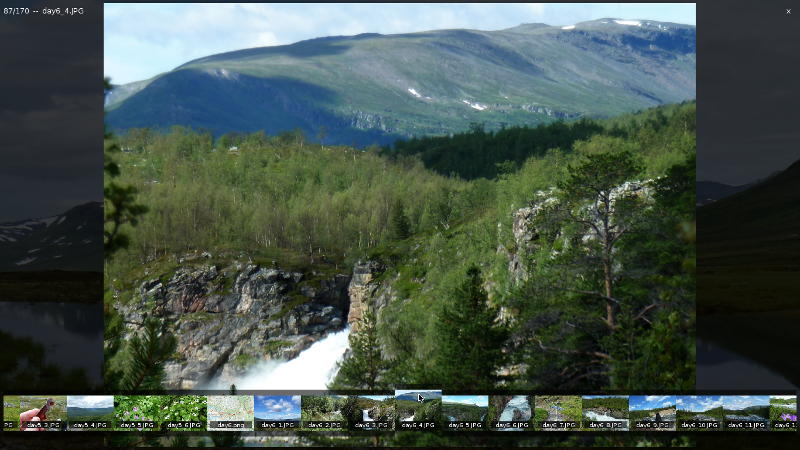
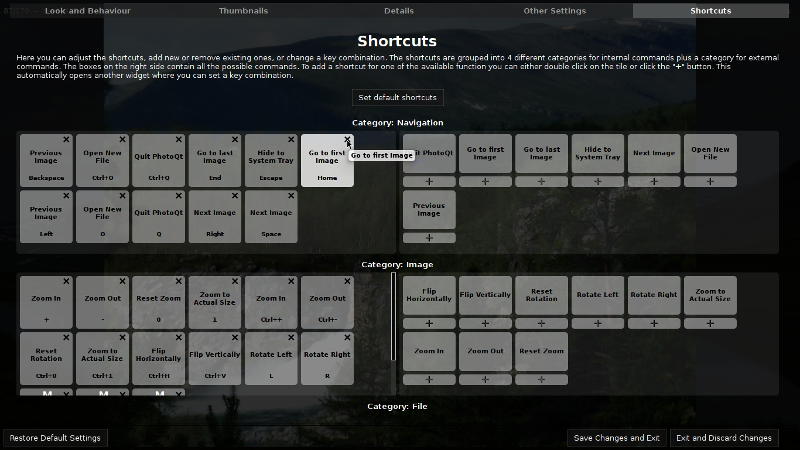
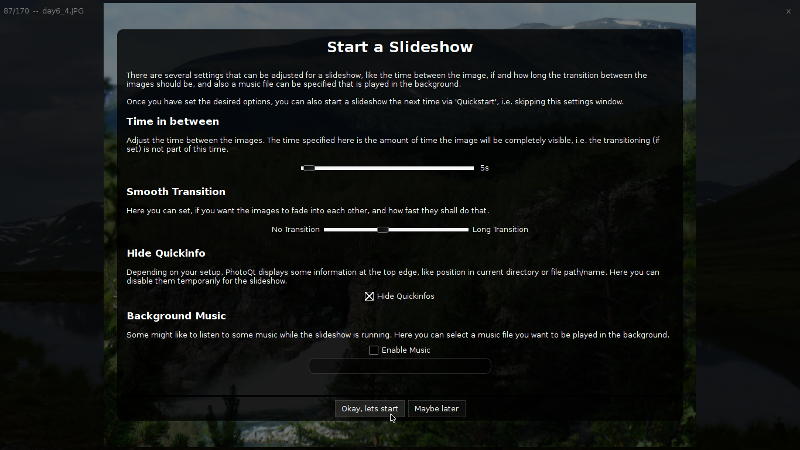
The most recent release PhotoQt 1.2 brings XCF and PSB/PSD support. It’s available in PPA for Ubuntu 14.10, Ubuntu 14.04 and Linux Mint 17.
To install it, open terminal from the Dash or by pressing Ctrl+Alt+T on keyboard. When it opens, do:
1. Run command to add the PPA:
sudo add-apt-repository -y ppa:samrog131/ppa
Type in your user password when it asks.
2. Update system package cache by running command:
sudo apt-get update
3. Finally install the image viewer:
sudo apt-get install photoqt
If for some reason you want to remove PhotoQt as well as the PPA repository, run below command in terminal:
sudo apt-get remove photoqt && sudo add-apt-repository -r ppa:samrog131/ppa
That’s it.
Foto is a very simple image viewer and album manager written in Vala using Gtk3, Clutter, Cairo and Granite. Here are the screenshots:
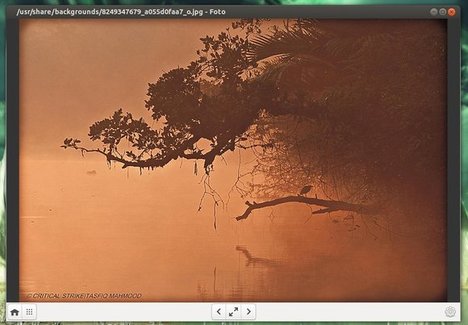
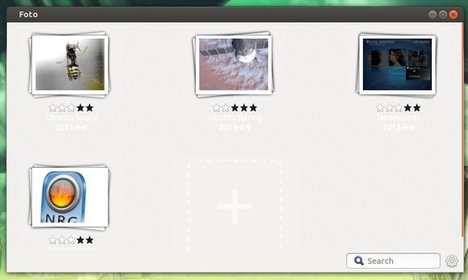
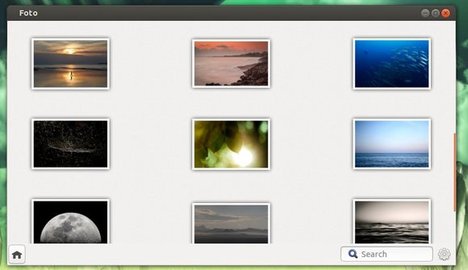
Foto is a new project, and it’s still in early development stage. If you are interested, install it in Ubuntu 13.04, Ubuntu 12.10, Ubuntu 12.04 and Linux Mint via PPA (press Ctrl+Alt+T to open terminal):
sudo add-apt-repository ppa:erasmo-marin/foto-daily-builds

sudo apt-get update

sudo apt-get install foto
Or download the DEB from this page