Archives For multimedia

Found the image viewers and editors, such as Loupe and GIMP, cannot load HEIF/HEIC images by default in Ubuntu 26.04? Here’s a quick guide show you why and how to fix.

Today I found that the default Loupe image viewer in Ubuntu 26.04 could not load my photo images imported from iPhone.

It said “Either the image file is corrupted or it contains unsupported elements“, and the more information page showed the error below:

Continue Reading…

FFmpeg, the popular multimedia library, released new 8.1.1 version few days ago.

This is a maintenance release that includes mostly bug-fixes, stability improvements, as well as few minor new features.

Continue Reading…

FFmpeg, the popular multimedia library, release new major 8.1 version yesterday on March 16th.

The new version, code-name “Hoare”, features some new encoders and decoders for more codecs support, new filters, and other improvements.

Continue Reading…

FFmpeg, the popular multimedia library released new version 8.0.1 in last week. Here’s the PPA contains the .deb packages for all current Ubuntu users.

As a maintenance update, the release includes only minor new features, some improvements, and bug-fixes. And, the FFmpeg website does not even provide an official release note for it.

Continue Reading…

FFmpeg, the popular free open-source multimedia library, released new major 8.0 version almost a year since the last 7.1.

The new FFmpeg 8.0, codename “Huffman”, added native decoding support for Samsung’s Advanced Professional Video (APV) codec, Apple’s ProRes RAW, Sanyo LD-ADPCM, RealVideo 6.0, G.728, and ADPCM IMA Xbox.
Continue Reading…

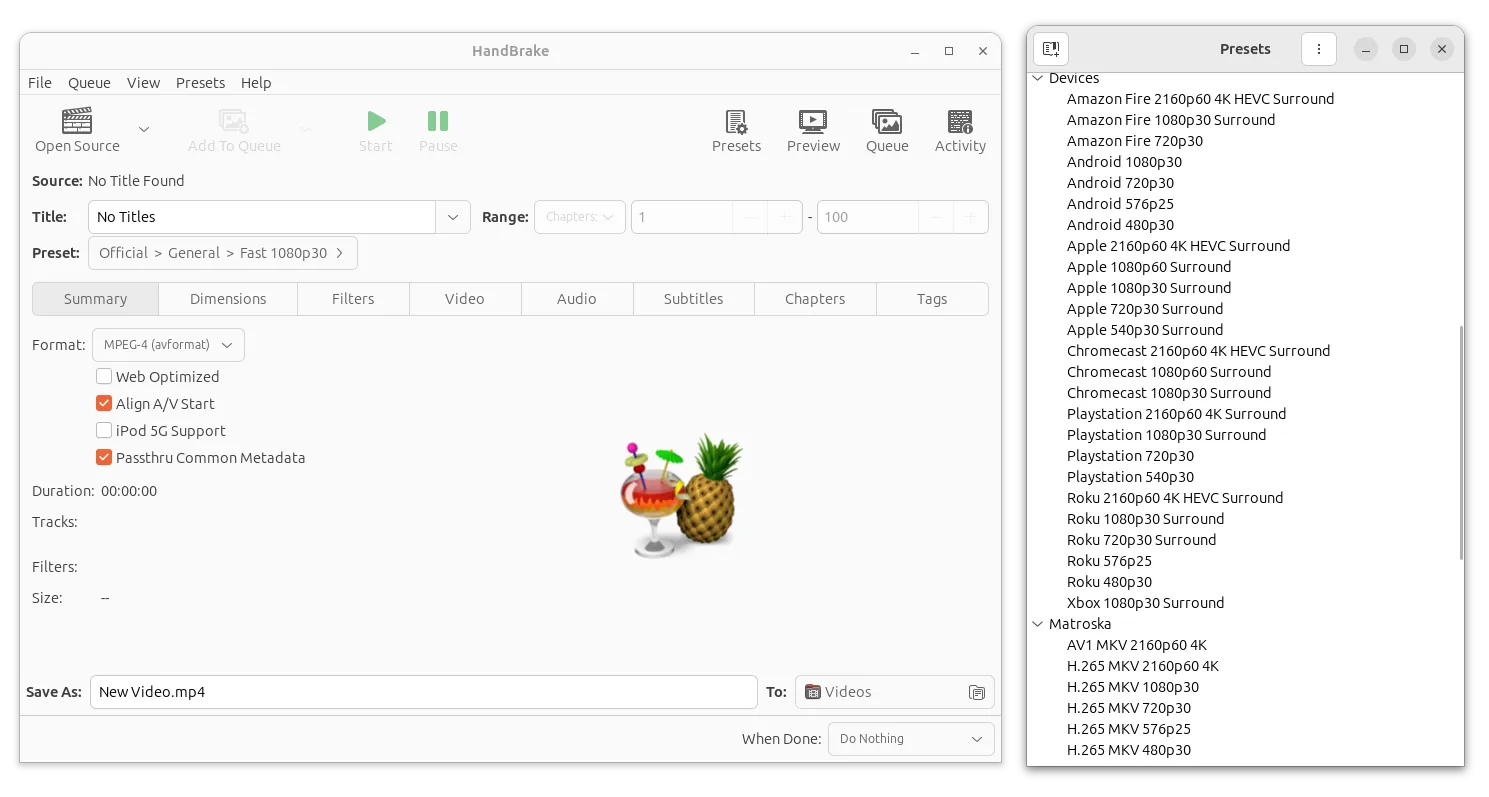
Just few weeks after the last release, HandBrake video transcoding released new 1.9.2 version with few more fixes.

In new HandBrake 1.9.2, it now allows muxing NVENC AV1 and VCN AV1 in WebM container. It also fixed a crash that could happen when a source contains chapters with no titles.

Continue Reading…

HandBrake video transcoder released new 1.9.1 version a few days ago. Here are the changes and native .deb packages for Ubuntu users.

The new HandBrake 1.9.1 contains primarily bug-fixes. It fixed FFV1 pixel format selection when an hardware decoder is used, causing incorrect bit depth output.

Continue Reading…

Upscayl, the popular free open-source AI image upscaler, announced new 2.15 released at Christmas!

The release improved user experience for enlarging and enhancing low-resolution images by new AI module and improved module selection dialog.

Instead of choosing from drop-down box, it now shows a pop-up screen. From where you may choose between modules with image previews.

Upscayl – AI mode selection dialog

Continue Reading…

The popular FFmpeg media library released new version 7.1 a few days ago. Here are the new features and Ubuntu PPA for Ubuntu 22.04 and Ubuntu 24.04 users.

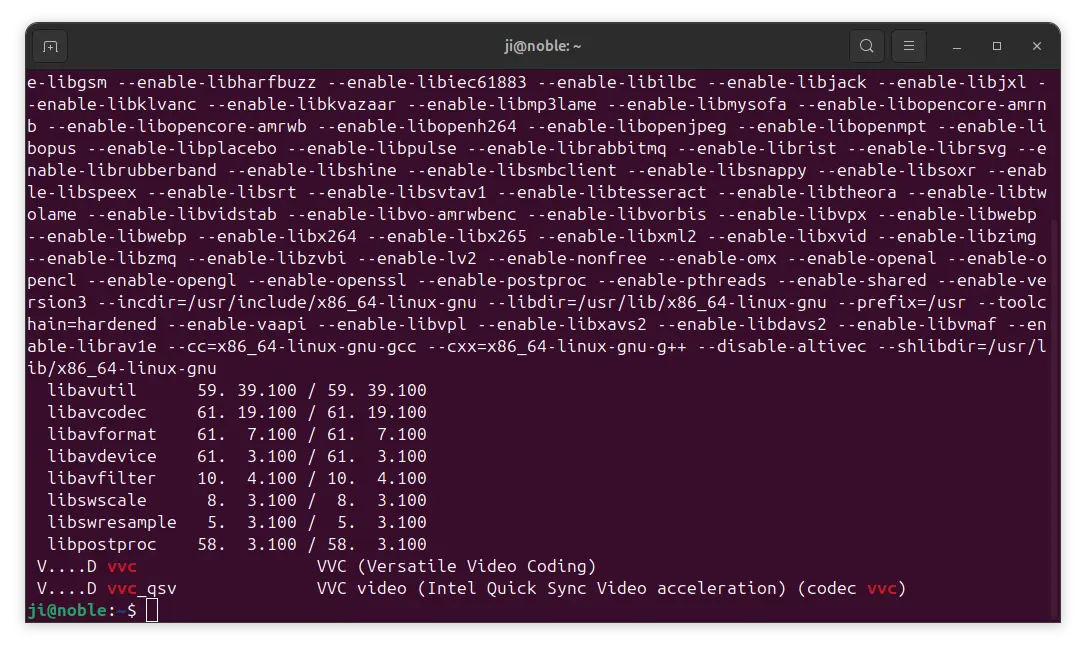
The new release of FFmpeg library added official VVC decoder support. Versatile Video Coding (VVC in short), also known as H.266, has about 50% better compression rate for the same quality compared to HEVC (aka H.265).  It supports resolutions ranging from very low up to 4K, 16K, and 360° videos, as well as YCbCr 4:4:4, 4:2:2 and 4:2:0 with 8–10 bits per component, HDR, variable and fractional frame rates from 0 to 120 Hz, and more.

FFmpeg added experimental VVC decoding support since the last 7.0 version. Now, the decoder goes official and it’s compatible with DVB test content. The release also supports for decoding VVC with Intel Quick Sync Video acceleration. As well, it supports encoding VVC using libvvenc library.
Continue Reading…

This simple tutorial shows how to easily turn your Ubuntu or Debian into home media server, so that you can listen to the music, watch photos and videos that are stored in Linux PC remotely using your mobile phones and/or smart TVs.

GNOME, the default desktop in Ubuntu and Fedora Workstation, has built-in option to enable this feature. It uses Rygel home media solution as backend.

It automatically transcode media to a format compatible with the client device. And, client machines that supports DLNA/UPnP, such as Sony PlayStation, Microsoft Xbox, smart TV, Android, iOS, can access them through the local network.
Continue Reading…