
Blender, the popular 3D computer creation software, released new 5.3 verison yesterday.
The new version of this free open-source software introduces an optional project system. It makes Blender aware of a larger context, rather than just the currently open blend file.
Each project has a root directory, and all files under that directory are considered part of the project.
Blender 5.3 adds a new operator in the Animation tab of the 3D Viewport, allowing to copy and past world-space animation, and, it supports multiple selected objects or bones.
It also adds a new operator, anim.rotation_mode_convert, as a replacement of the deprecated Rigify pose.convert_rotation, to convert animation between rotation modes.
The extension system now supports Asset Libraries. User can now install asset libraries from an Extensions Repository, along with the Add-ons and Themes.
Remote Asset Libraries supports access token authentication. And, assets in online/remote libraries can now be ‘replaced’ with versions for newer Blender releases.
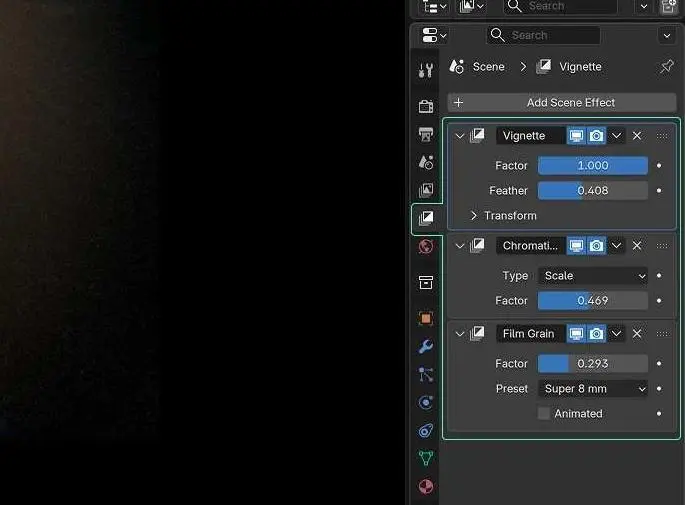
Compositor now lets users apply multiple visual effects in a stack, one after another, similar to how Geometry Nodes modifiers are organized. And, the interactive compositor now supports playback caching , with playback up to 2x faster on GPU.
The Principled BSDF now supports Dispersion, which can be used to render glass or diamonds that split white light into rainbow colors.
Roughness anisotropy is now supported by the Glass BSDF and the transmission component of the Principled BSDF, which works the same as the roughness anisotropy for the specular reflection.
On NVIDIA GPUs with 620 ow newer driver, the viewport now features a new DLSS denoiser. It provides a cleaner image faster through upscaling and reusing samples from previous frames.
Blender 5.3 also introduces new low level Construct Curves node for building curves with a custom topology, a few new volume grid nodes, and new input nodes for accessing built-in attributes for NURBS curves.
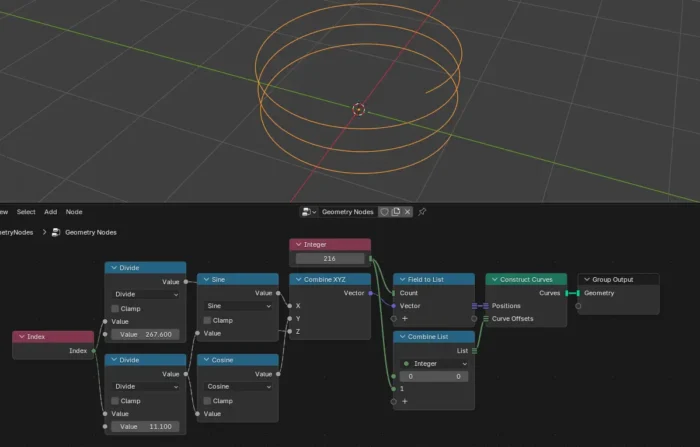
image from developer.blender.org
Other changes include:
- Add material Lighting nodes for precise control over how materials react to lights.
- Vulkan backend as default on Windows and Linux.
- New Carver tool, selection and editing support for Grease Pencil’s Draw Mode.
There are also numerous other new features and improvements. See the official release note for details.
How to Install Blender 5.3
Blender provides official packages for Linux, Windows, and macOS, which are available to download in its website via the link below:
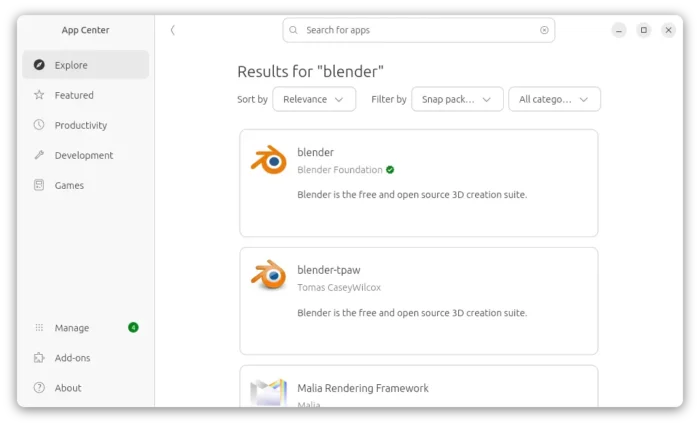
For Linux, choose download the tarball, decompress then run the executable file from extracted folder to launch the software. While, Ubuntu may search & install the Snap package from App Center.
And, a community maintained Flatpak package is available, that works in most Linux distributions by running in sandbox environment.